

NAMA MARKET ACTIVITY
ASSET SALES
In order to meet debt repayment targets, NAMA debtors and receivers have agreed, as part of their arrangements with NAMA, to a phased and orderly disposal of the property assets securing their loans. Up to the end of 2012, NAMA had approved asset sales with an aggregate value of €11.7 billion, including €4 billion of approved sales in 2012. Over the same period, completed asset sales stood at €6.8 billion, including €2.8 billion of sales in 2012. There are sales valued at about €2 billion in the pipeline. Where approved sales do not, for a variety of reasons, proceed to completion, the property is returned to the market and may subsequently be sold to a new buyer on different terms and conditions.
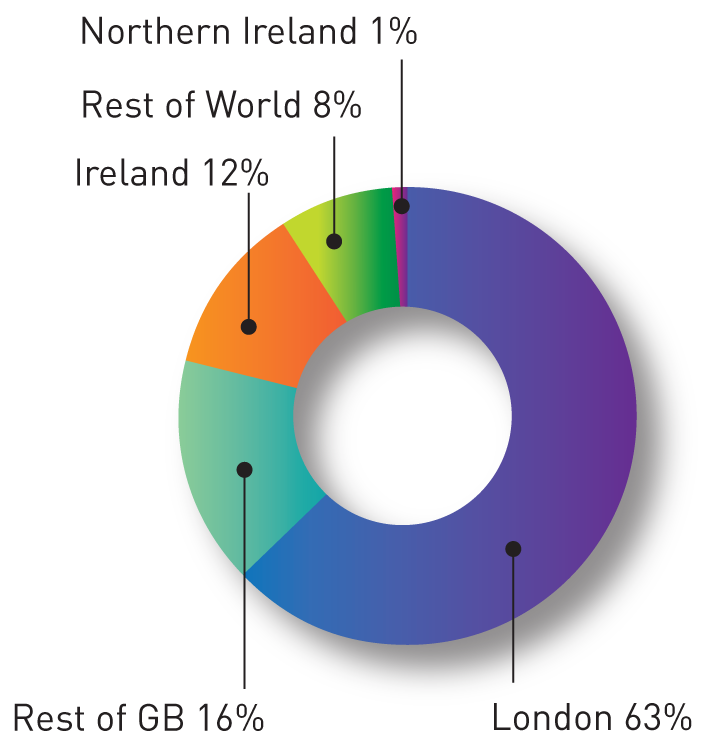
Property sales by debtors and receivers to date have been heavily influenced by liquidity conditions in various markets and by the attractiveness of various asset classes to investors. Close to 80% of sales to date have involved assets in Britain, particularly in London, where prices have increased since the associated loans were acquired by NAMA. Generally speaking, the most attractive assets to investors have been offices, hotels and residential units in Britain. Asset sectors which have been viewed as moderately attractive by investors include development and retail assets in Britain and certain segments of the Irish market including large office units in Dublin.
| FIGURE H: Disposals by location, inception to end-2012 |
|---|
 |
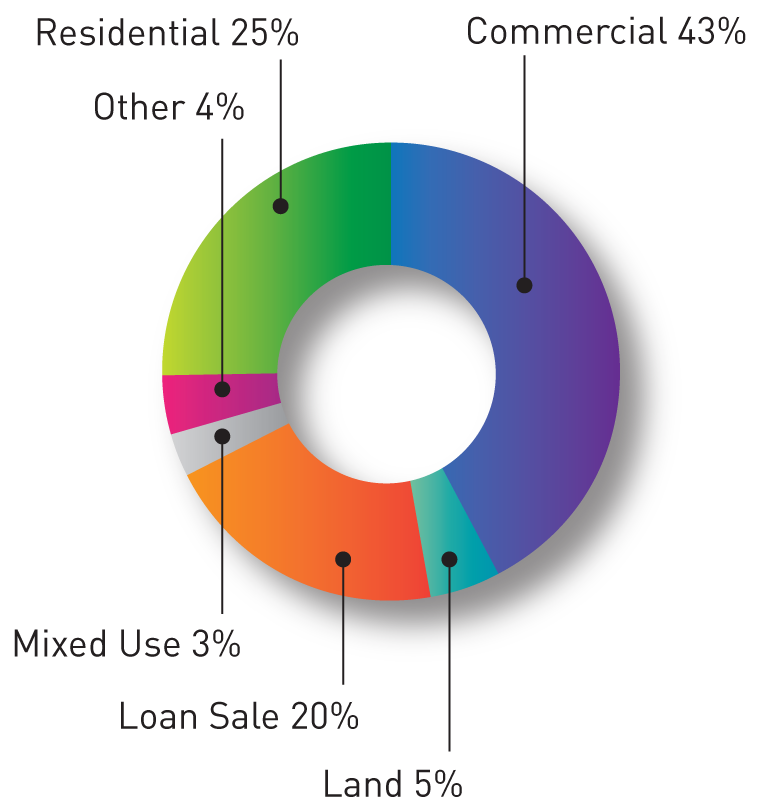
| FIGURE I: Asset sales to end-2012 by asset type |
|---|
 |
In Ireland, there are currently properties valued at approximately €780m on the market through appointed insolvency practitioners and a further €750m of property for sale through NAMA debtors. Over much of the period since NAMA's establishment, the Irish market has been relatively stagnant due to a number of factors, notably the overhang of excess supply, the absence of bank funding, deleveraging by foreign and domestic banks and the uncertainty regarding rent review arrangements (ultimately resolved by the 2012 Budget) which inhibited foreign investment. In consequence, NAMA's approach to assets located in Ireland has involved active management and, where appropriate, additional capital funding with the objective of generating cash flow in the near term and of optimising disposal proceeds over a medium-term horizon.
LOAN SALES
To date, NAMA has completed sales of loans with nominal balances of €2.5 billion. These sales have included a mixture of individual loans and debtor connection portfolios in the US, the UK and Ireland. The loan sale market in the UK and Ireland is continuing to develop and NAMA engages extensively with investors interested in portfolio and individual loan sales. NAMA's policy in relation to loan sales, as with the sale of properties by its debtors and receivers, is that, other than in exceptional circumstances, loans should be openly marketed. For this purpose, two panels of loan sale advisors have been appointed – one for loan sales in the US and one for loan sales in Ireland/Britain/Europe. To date, loan sales have been mainly triggered by third-party approaches. After receiving such approaches, NAMA's practice is to appoint loan sale brokers to market the loans and to deal with offers from the original bidder and from other interested parties.
NAMA FUNDING
A key element in NAMA's strategic planning is recognition of the need for investment to preserve and enhance the value of assets securing its loans. Reflecting this, it announced in May 2012 that it would provide funding of €2 billion in Ireland over the period from 2012 to 2016 to enable construction projects currently in progress to be completed and to develop new projects to meet prospective supply shortages in certain market segments. Decisions in relation to project funding are determined by NAMA's view of the projects most likely to generate a strong commercial return to the taxpayer. Against the background of an Irish market which has excess supply, NAMA will not engage in speculative development and, therefore, proven demand from potential purchasers or tenants is a key criterion in assessing potential capital funding.
During 2012, NAMA approved €741m in new advances of working and development capital. This brought the cumulative approval of advances to over €1.7 billion since inception, with €710m or 42% relating to property assets in Ireland.
Examples of some significant capital projects currently approved for funding by NAMA are outlined below:
Subject to fulfilment of certain conditions, NAMA has approved €20m in development funding for Phase 2 at Scotch Hall Shopping Centre in Drogheda, to comprise additional retail units and leisure facilities including an eight-screen cinema. The investment will not only create a significant retail and leisure destination within the North East region but it will protect existing employment and create new employment opportunities during the construction phase and on completion. Completion of the project is expected in late 2014.
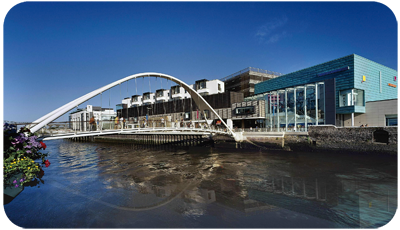
NAMA is providing €10.6m in development funding for the completion of Block B2A in Beacon South Quarter which has been in a partially completed form for some time. The completed block will comprise 85 apartments, 16,000 sq. ft. of commercial space and dedicated community space. The project is due for completion in March 2014.
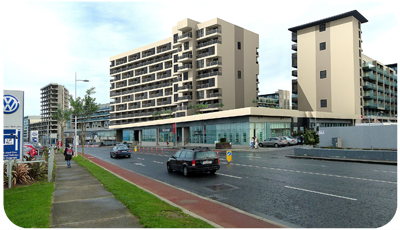
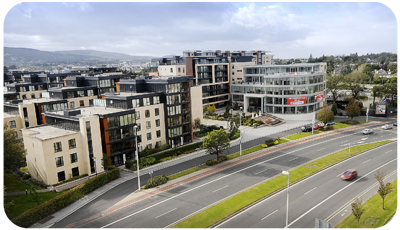
NAMA is providing €14m in development funding for the completion of Block G in The Grange development in Stillorgan, Co. Dublin, a mixed residential and commercial development. The funding will see the completion of a partially constructed block of 120 apartments, bringing the total completed residential units in the development to 451. Block G will be developed on a phased basis with full completion expected in Q3 2014.
NAMA is providing funding of €10.5m (£8.6m) through an agreement between the court-appointed administrator and a Northern Ireland-headquartered construction company for a new 95-unit housing development in Millmount, Dundonald, close to Belfast. An estimated 100 jobs will be generated during the construction phase of the project, which is expected to last approximately 18 months. When completed, the first phase will consist of 95 mainly three-bedroom and four-bedroom houses. The development is designed to deliver quality homes for people looking to live and work in Belfast. The site has outline planning for 510 residential properties which may be delivered in subsequent phases subject to market conditions and the success of the initial phase.
NAMA approved and released €17.4m for the completion of a commercial development in Oranmore, Co. Galway which was pre-let to a multinational retailer. The scheme consisted of 5,500m2 of retail space and 4,000m2 of office and medical centre space. Additional capital projects are being considered for the adjacent sites which will provide renewed focus for the town centre.
OTHER FUNDING INITIATIVES
NAMA is providing funding for a wide range of other projects throughout the country. In Galway, for instance, projects supported include an extension to the G Hotel, various works at Wellpark Retail and Leisure Park, and refurbishment of residential units at Edward Square. In Cork, NAMA-supported projects include a new 68,000 sq. ft. retail outlet in Ballincollig and the fit-out of 50,000 sq. ft. of office space for Apple at Half Moon Street. The Agency is also funding new residential developments in a number of the main urban centres in line with identified demand.
In addition to funding delivered through NAMA's Asset Recovery division, which includes the projects outlined above, NAMA's Asset Management division is focusing on the development of a number of large-scale projects in markets where NAMA has material exposure and where demand for completed or new buildings justifies a project-focused effort. This involves activities ranging from securing planning permission for development or redevelopment through to the financing and delivery of significant development projects.
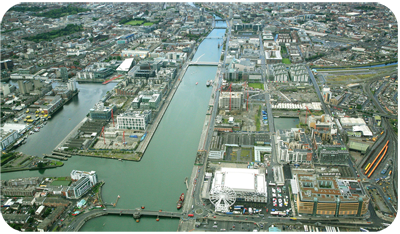
In that context, NAMA has focused on a number of key markets including the Dublin Central Business District office market, where a shortage of larger office space is emerging, and the London and Dublin residential markets. NAMA is devoting particular attention to the Dublin Docklands area, where the Agency holds security over a significant number of buildings and sites. The area is expected to require significant new development over the medium-term, particularly of commercial office space, to accommodate the continued expansion of the International Financial Services Centre ('IFSC') and the creation of new business and technology hubs linked to existing companies such as Google and Facebook.
PLANNING
The planning system is an important focus for NAMA. Delivery of a number of projects within NAMA's portfolio, and by extension NAMA funding, is contingent on securing viable planning permissions. For this reason, NAMA, either directly or through debtors and receivers, engages with the planning system in respect of a range of issues including development plan processes, viable planning options and infrastructure capacity constraints and opportunities. For example, in the residential sector, NAMA is engaging with planning authorities, particularly in Dublin, to discuss commercially viable solutions to prospective supply constraints. Local planning policy, particularly in terms of the planning objectives set out in city/county/local development plans, is a major consideration in these discussions and density requirements and development contribution levies are important factors in terms of determining whether proposed developments can proceed.